Tools and insights for impact-driven organizations
Guides, templates, webinars, and research to help your organization collect better data, tell a stronger story, and grow your impact.
The CSA Program Launch Playbook
A practical framework and worksheets to help communities design and launch successful Children's Savings Account initiatives.
The CSA Program Operations & Growth Playbook
How established Children's Savings Account programs streamline operations, scale participation, and manage incentives effectively.
Logic Model Builder: From Mission to Measurable Outcomes
A step-by-step guide to map your program theory and identify the outcomes that matter most to funders.
5 Outcome Measurement Mistakes Nonprofits Make (and How to Fix Them)
Common pitfalls we see at hundreds of organizations — and practical steps to get your data back on track.
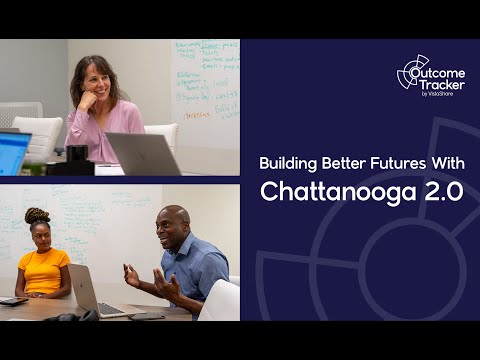
Empowering Families: How Outcome Tracker Supports the Chattanooga Future Fund
How Hamilton County's college savings program uses
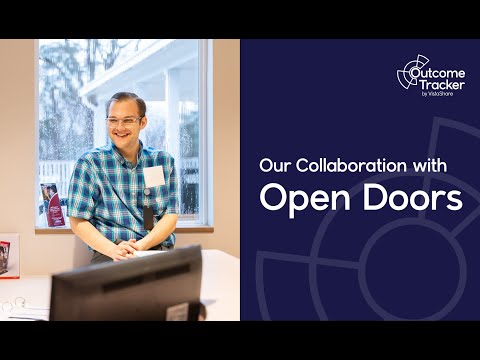
From Shelter to Stability: How Data Helps Open Doors Change Lives
How Open Doors went from Word docs and spreadsheets to a unified CRM — and transformed the way they measure and communicate impact.
The OT Newsletter
Monthly insights on nonprofit data, outcome measurement best practices, and product updates — delivered to your inbox.
Ready to go beyond the resources?
See
2024 State of Nonprofit Data: Benchmarks & Trends
Every year,
"We know we need better data. We just don't have the time or the tools to get there."
— Survey respondent, housing nonprofit, Midwest
Key Finding #1: Spreadsheets Are Still the Default
67% of surveyed organizations still manage client data primarily in spreadsheets or shared documents. While familiar and flexible, spreadsheets create serious problems at scale: version control issues, data entry errors, and an inability to generate reports quickly. Organizations using dedicated outcome management platforms reported spending 60% less time on reporting.
Key Finding #2: Proving Impact Is the #1 Challenge
When asked about their biggest data challenge, "proving impact to funders" topped the list for the third consecutive year. 3 in 5 leaders said they frequently struggle to generate reports that accurately reflect their work — and 44% said they had missed a funding opportunity because they couldn't produce the right data in time.
Key Finding #3: Staff Time Is the Hidden Cost
On average, nonprofit staff spend 6.3 hours per week on data entry, cleaning, and reporting. For a 10-person team, that's more than 3,000 hours annually — time that could be spent directly serving clients. Organizations that implemented outcome management platforms reduced this burden by an average of 4 hours per staff member per week.
Key Finding #4: Client Engagement Data Is Largely Missing
Only 28% of organizations report tracking longitudinal client outcomes — meaning they know who came in the door, but not what happened after. Funders are increasingly asking for long-term outcome data, and organizations without it are at a disadvantage in competitive grant cycles.
What High-Performing Organizations Do Differently
Organizations that reported the highest confidence in their data shared three common traits:
- They use a single, centralized platform for all client data — not multiple disconnected tools.
- They collect outcome data at multiple touchpoints — intake, mid-program, and exit — not just at the end.
- They have dedicated time and ownership for data review — at least one staff member whose role includes data quality.
About this report: Data collected via online survey of 412 nonprofit leaders across the United States between September and November 2024. Respondents represent organizations serving housing, family services, workforce development, youth education, and social services sectors.
Logic Model Builder: From Mission to Measurable Outcomes
A step-by-step guide to mapping your program theory and identifying the outcomes that matter most to funders and the people you serve.
A logic model is one of the most powerful tools in a nonprofit's toolkit — and one of the most misunderstood. At its core, a logic model answers a deceptively simple question: If we do this work, what will change? This guide walks you through building one from scratch, even if you've never done it before.
What Is a Logic Model?
A logic model is a visual map of your program's theory of change. It shows the connection between what you invest (inputs), what you do (activities), who you reach (outputs), and what changes as a result (outcomes). Funders love them because they demonstrate that you understand not just what you're doing — but why it works.
Step 1: Start with Your Long-Term Outcome
Most organizations make the mistake of starting with their activities. Instead, start at the end: What is the ultimate change you want to see in the world? Be specific. "Improved lives" is too vague. "Participants achieve stable housing within 12 months of program exit" is a measurable long-term outcome. Work backwards from there.
Step 2: Identify Your Short-Term Outcomes
Short-term outcomes are the changes in knowledge, skills, attitudes, or behaviors that need to happen before the long-term outcome is achievable. If your long-term goal is housing stability, a short-term outcome might be: "Participants demonstrate understanding of tenant rights and budgeting skills." Ask yourself: what needs to be true at 3 and 6 months for the long-term outcome to happen?
Step 3: Map Your Outputs
Outputs are the countable products of your activities — number of people served, sessions held, resources distributed. Outputs tell funders the scale of your work. They don't prove change, but they provide important context. Common outputs: number of clients enrolled, workshops delivered, coaching hours provided.
Step 4: Define Your Activities
Activities are what your staff actually does: case management, group workshops, financial coaching, housing navigation. Each activity should connect directly to at least one outcome. If you can't draw that line, ask whether the activity belongs in the program.
Step 5: List Your Inputs
Inputs are the resources that make your work possible: staff time, funding, office space, partner relationships, technology. Funders want to understand the investment required to produce your outcomes — inputs help make that case.
Once your logic model is built, use it to design your outcome surveys. Every short-term and long-term outcome in your model should have at least one survey question that measures it. This is exactly how
Common Logic Model Mistakes to Avoid
- Confusing outputs with outcomes. "Served 200 clients" is an output. "80% of clients secured stable employment" is an outcome.
- Making outcomes unmeasurable. Every outcome should be something you can actually track with data.
- Building it once and forgetting it. Your logic model should be a living document — revisit it annually and update it as your programs evolve.
5 Outcome Measurement Mistakes Nonprofits Make (and How to Fix Them)
Common pitfalls we see at hundreds of organizations — and practical steps to get your data back on track.
After working with hundreds of nonprofits across the country, our team has seen the same data challenges come up again and again. The good news: most of these mistakes are fixable. Here are the five we see most often — and what to do about them.
Measuring outputs instead of outcomes
The mistake: Tracking how many people you served, classes you held, or resources you distributed — and calling that your "impact."
Why it matters: Funders increasingly want to know what changed for the people you served — not just how many showed up. Outputs tell the story of activity; outcomes tell the story of change.
The fix: For every program activity, ask: "So what?" If you ran 20 financial literacy workshops, so what? Did participants change their saving behaviors? Did debt decrease? Build surveys that capture that shift.
Only collecting data at intake
The mistake: Collecting detailed information when someone enters your program — and then nothing after that.
Why it matters: Intake data tells you who walked in the door. It tells you nothing about what happened next. Without mid-program and exit data, you can't demonstrate change over time.
The fix: Design a minimum of three touchpoints: intake, mid-program (3–6 months), and exit. Even simple check-in surveys with 5–10 questions can reveal meaningful patterns over time.
Letting data live in silos
The mistake: Client information spread across spreadsheets, email threads, shared drives, and paper files — with no single source of truth.
Why it matters: Siloed data means double entry, errors, and hours spent preparing reports. It also makes it nearly impossible to track a client's full journey across programs or time periods.
The fix: Centralize. Whether that's a dedicated CRM, a purpose-built outcome platform, or even a well-structured shared database — one system, one version of the truth. Every hour spent wrangling spreadsheets is an hour not spent serving clients.
Measuring what's easy, not what matters
The mistake: Tracking whatever is easiest to count — attendance, number of calls, forms completed — rather than the outcomes most meaningful to your mission.
Why it matters: Easy metrics create a false sense of progress. You can have perfect attendance records and still not know if your program is working.
The fix: Start with your theory of change. What needs to be true for your mission to be achieved? Work backwards to identify what data you actually need — then figure out how to collect it. A logic model is the best tool for this.
Treating reporting as a one-time event
The mistake: Only pulling data when a grant report is due — leading to scrambling, incomplete records, and rushed narratives.
Why it matters: Last-minute reporting is stressful, error-prone, and produces weaker results. Funders can often tell when a report was thrown together.
The fix: Build a culture of continuous data. Review your outcome data monthly — even informally. Share a simple dashboard with leadership quarterly. When reporting time comes, you'll have everything you need already organized and ready to tell a compelling story.
The bottom line
Good outcome measurement isn't about having perfect data — it's about having useful data. Data that helps your team make better decisions, tells a compelling story to funders, and ultimately helps more people. If any of these mistakes sound familiar, the good news is that the fix is usually simpler than it seems.
2024 State of Nonprofit Data: Benchmarks & Trends
December 2024 ·
Every year, nonprofits across the country are asked to do more with less — and to prove they're doing it. But when we surveyed over 400 nonprofit leaders in 2024, we found that most organizations are still fighting an uphill battle with their data. This report shares what we learned, and what it means for the sector.
"The organizations doing the most important work are often the ones least equipped to prove it. That gap has real consequences — for funding, for growth, and for the communities they serve."
Key Finding #1: Spreadsheets Are Still the Default
67% of respondents reported that spreadsheets remain their primary tool for tracking client data and outcomes. While spreadsheets are familiar, they introduce significant risk: version control problems, data entry errors, and no audit trail. Organizations relying on spreadsheets spent an average of 14 additional hours per month on reporting compared to those using purpose-built platforms.
Key Finding #2: Funders Are Asking for More
75% of respondents said funder expectations around data and impact reporting had increased over the past three years. Yet only 31% felt confident in their ability to meet those expectations consistently. The gap between what funders want and what organizations can deliver is widening — and it's costing nonprofits in both funding and credibility.
Key Finding #3: Staff Time Is the Hidden Cost
Program staff at organizations without dedicated data systems reported spending an average of 6.2 hours per week on administrative data tasks — time that could be spent serving clients. For a team of 10 program staff, that's over 3,000 hours per year lost to manual data work.
Key Finding #4: The Longitudinal Data Gap
Only 22% of organizations surveyed could track client outcomes longitudinally — meaning across multiple programs or over multi-year periods. This is one of the most important capabilities funders are increasingly requesting, yet it remains out of reach for most organizations without the right infrastructure.
Key Finding #5: The Turnaround Is Possible
Organizations that had adopted purpose-built outcome management platforms reported significantly better outcomes: 4x faster reporting, 89% higher funder confidence scores, and staff who felt more connected to the impact of their work. The technology gap is real — but it's closeable.
If your team is still managing outcomes in spreadsheets, struggling to respond to funder data requests, or losing staff hours to manual reporting — you're not alone. But you don't have to stay there.
Logic Model Builder: From Mission to Measurable Outcomes
A step-by-step framework for nonprofit program teams
A logic model is the foundation of any strong outcome measurement strategy. It's a simple but powerful tool that maps the connection between what your program does and the change it creates in the world. Funders love them. Boards find them clarifying. And program staff who build them often say it's the first time they've seen their entire program on one page.
Here's how to build one — step by step.
Step 1: Start with Your Inputs
Inputs are the resources your program brings to the work: staff time, funding, facilities, volunteers, partner relationships, and technology. Be specific — list the actual resources, not just categories. This grounds the rest of your model in reality and helps you understand what's required to sustain the program.
Step 2: Define Your Activities
Activities are what your program actually does — the services, workshops, case management sessions, classes, or interventions you deliver. These should be specific and observable. If you can't describe an activity in one clear sentence, break it down further. Activities are the engine of your program.
Step 3: Identify Your Outputs
Outputs are the direct, countable products of your activities: the number of workshops held, clients served, meals provided, or hours of counseling delivered. Outputs are important because they demonstrate scale and reach — but they are not outcomes. A common mistake is confusing the two. Outputs tell you what you did; outcomes tell you what changed.
Step 4: Define Short, Medium, and Long-Term Outcomes
Outcomes describe the changes your program creates in the lives of participants. Think in three horizons:
- Short-term (0–1 year): Changes in knowledge, attitudes, or skills. What do participants know or believe differently after your program?
- Medium-term (1–3 years): Changes in behavior or practice. Are participants doing something differently?
- Long-term (3+ years): Changes in conditions or status. Has housing stability improved? Has income increased? Has health improved?
Step 5: Connect to Your Impact
Impact is the broader, long-term vision your outcomes contribute to — reduced poverty, stronger families, a more educated workforce. Impact is often shared across multiple organizations and programs, and it can take years or decades to measure. Your job is to connect your outcomes to a bigger story about change in your community.
Step 6: Choose Your Indicators
For each outcome, identify at least one measurable indicator — a specific, observable signal that tells you the outcome is occurring. Good indicators are SMART: Specific, Measurable, Achievable, Relevant, and Time-bound. This is where your logic model connects directly to your data collection strategy.
Once your logic model is built, your outcome indicators map directly to the surveys, data collection tools, and reports you'll configure in
5 Outcome Measurement Mistakes Nonprofits Make (and How to Fix Them)
April 2025 ·
We've worked with hundreds of nonprofits on their outcome measurement systems. And while every organization is different, we see the same five mistakes come up again and again. The good news: every one of them is fixable. Here's what to watch for — and how to get back on track.
Confusing Outputs with Outcomes
The mistake: Reporting on the number of people served, classes held, or meals delivered — and calling it impact.
Why it matters: Outputs tell funders what you did. Outcomes tell them what changed. A funder who asks "did it work?" wants to know about outcomes, not activity counts.
The fix: For every output you track, ask "so what?" What changed in the participant's life as a result? That's your outcome. Start building surveys and check-ins around those changes.
Measuring Too Many Things at Once
The mistake: Building a 40-question intake survey, tracking 15 different outcomes, and creating separate reports for every funder.
Why it matters: When you measure everything, you learn nothing — and your staff burns out collecting data nobody uses.
The fix: Identify 3–5 core outcomes that are central to your mission and focus your measurement there. Build a logic model first. Let your most important outcomes drive what you collect.
Only Collecting Data at the End
The mistake: Running an exit survey at the end of a program and using that as your only source of outcome data.
Why it matters: Without a baseline, you can't measure change. You don't know where participants started, so you can't demonstrate how far they've come.
The fix: Implement intake surveys that capture baseline data on the outcomes you care about. Then measure again at mid-point and exit. The difference is your impact.
Keeping Data in Silos
The mistake: Program A has its data in one spreadsheet, Program B has a different system, and leadership has no unified view of organizational performance.
Why it matters: You can't learn from your data if you can't see all of it. Siloed data also makes cross-program reporting nearly impossible — which is exactly what most funders want.
The fix: Move to a single platform that all programs use. Unified data doesn't mean identical programs — it means a consistent structure that lets you compare, aggregate, and report across everything you do.
Treating Data as a Reporting Obligation, Not a Learning Tool
The mistake: Collecting data to satisfy funders, then filing it away until the next grant report is due.
Why it matters: The most powerful use of outcome data isn't compliance — it's learning. Organizations that use data to improve their programs consistently outperform those that don't.
The fix: Build a rhythm of data review into your team's regular work. Monthly dashboard reviews, quarterly outcome check-ins, and annual program evaluations turn data from a burden into a competitive advantage.
Getting outcome measurement right isn't about collecting more data — it's about collecting the right data, in the right way, and using it to tell a story that's true.
Empowering Families: How Outcome Tracker Supports the Chattanooga Future Fund
In Hamilton County, Tennessee, building a stronger future starts with investing in students. The Chattanooga Future Fund is doing just that. Created as a college and career savings program for public school students in kindergarten through middle school, the Fund is more than a financial tool. It's a symbol of hope for families and a resource designed to help children discover their strengths and envision what's possible.
The Future Fund is one part of a larger vision built around four priorities: early childhood, literacy, pathways to prosperity, and long-term savings. It's a community-wide effort. And behind the scenes,
Tracking What Matters
As the Future Fund expanded, the team needed a better way to manage information.
Converting Outreach into Impact
With
Built for Collaboration and Growth
What makes
Making Time for What Matters
From Shelter to Stability: How Data Helps Open Doors Change Lives
Small nonprofits like Open Doors face daily challenges: limited staff, disconnected systems, and growing pressure to demonstrate impact. For Executive Director Nate Riddle, finding a better way to manage data wasn't just about efficiency — it was about enhancing the quality of care.
That's why Open Doors transitioned from managing information in Word documents and spreadsheets to using
Saving Time, Improving Care
With secure online intake forms that feed directly into the system, staff no longer need to enter data multiple times or juggle disorganized spreadsheets. Everything is centralized, consistent, and protected. "We went from a Word doc and Excel sheet organization to a secure case management platform," Nate says.
Making Data Come to Life
Open Doors can now follow a client's entire journey — from their first night in the shelter to long-term housing or other positive outcomes. "It's unified the data," Nate explains, "but it's also allowed us to make the data come to life."
Reporting with Confidence
With
A Partner, Not Just a Platform
The CSA Program Operations & Growth Playbook
Enter your details below and we'll give you instant access to the free download.
You're all set!
Click below to download your free copy of the CSA Program Operations & Growth Playbook.
Download the Playbook ↓The CSA Program Launch Playbook
Enter your details below and we'll give you instant access to the free download.
You're all set!
Click below to download your free copy of the CSA Program Launch Playbook.
Download the Playbook ↓Chat with us
We typically reply within a few hours
We'll be in touch at your email shortly.